
Building The Infrastructure Series: Chicago’s Record Labels Are Rebuilding the Industry From the Ground Up
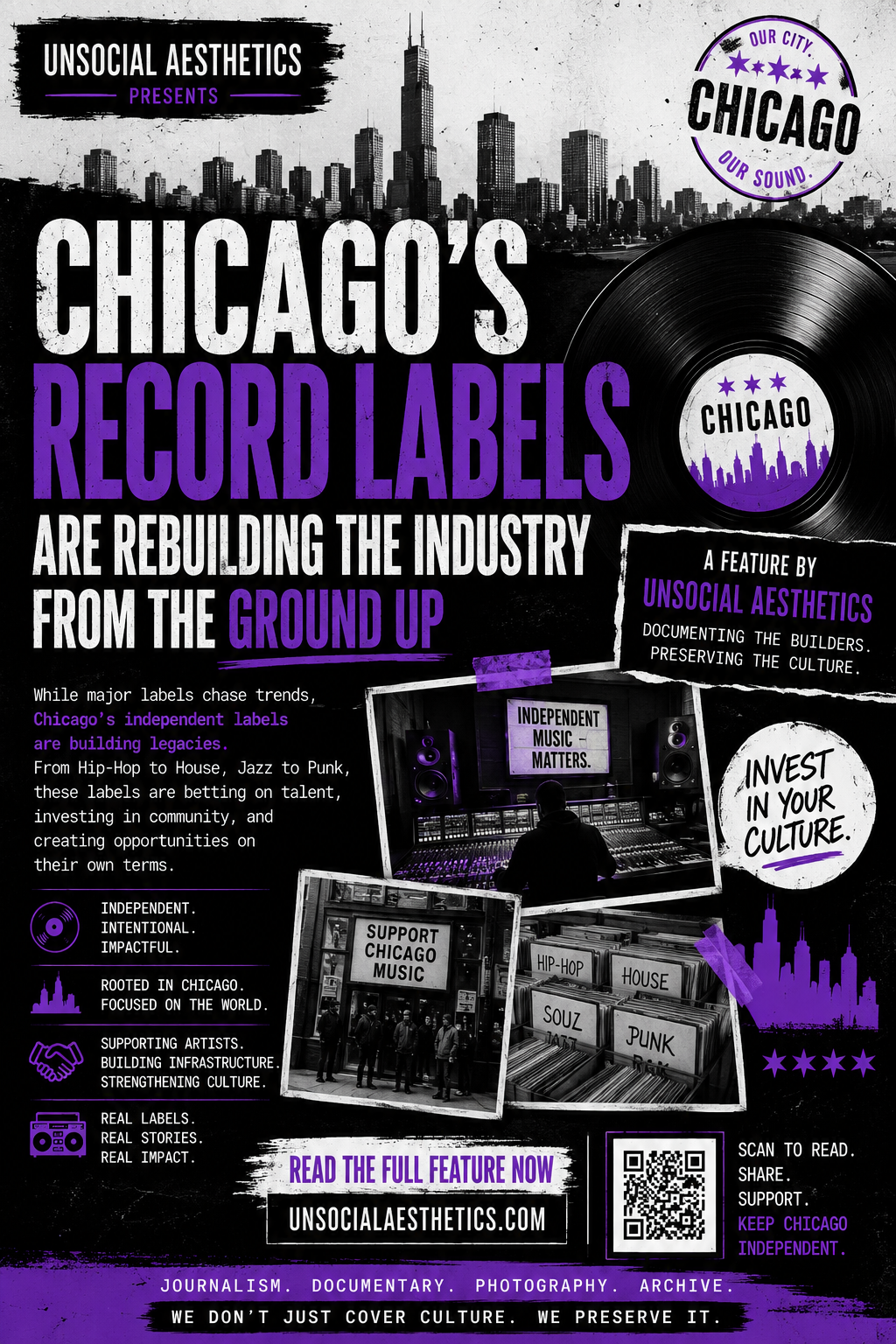
For decades, one of the biggest conversations surrounding Chicago’s music scene has had very little to do with talent. No one has ever questioned whether Chicago could produce world class artists. The city has given the world innovators in blues, jazz, gospel, house, hip-hop, soul, R&B, and nearly every genre imaginable. The real question has always been something else, where is the infrastructure? Chicago has never suffered from a lack of creativity. It has suffered from a lack of sustained investment. The city has consistently developed artists who would go on to shape popular culture around the world, only for many of them to eventually build their careers elsewhere because the resources needed to sustain that growth often didn’t exist at home. Managers, distributors, publishing companies, recording studios, marketing agencies, touring support, and record labels have all existed in Chicago, but rarely at the scale needed to keep pace with the city’s creative output. That conversation has followed Chicago artists for generations.
A Legacy Bigger Than Most People Realize
Chicago has never been absent from the music business. This is the city that helped build modern blues. This is where gospel music found one of its strongest commercial homes. This is where house music was born before changing dance floors around the globe. Hip hop, soul, jazz, and independent music have all found fertile ground here. Record labels have always been part of that story. Some became legendary. Others disappeared before receiving the recognition they deserved. Some were independent operations built by neighborhoods. Others were major label branches looking to capitalize on the city’s talent before eventually leaving. As producer legendary producer Tony Baines has pointed out, one of the last major labels to maintain a significant presence in Chicago was Jive Records during it’s relationship with R. Kelly. After that era, many people felt the city had once again been left to build for itself. That perception shaped an entire generation of artists who often believed success meant eventually leaving Chicago.
The Independent Era
Today, that narrative is changing. Instead of waiting for major labels to return, Chicago entrepreneurs are creating the infrastructure themselves. Independent labels have quietly become some of the city’s most important cultural institutions. They’re not simply releasing music, they’re investing in artists, developing careers, producing visual content, building relationships with festivals, creating merchandise, and introducing audiences to musicians who might otherwise not see that resource. Jon Monopoly continues to invest in artists while demonstrating what long term growth can look like by creating distribution services that’s helping the artists directly. Closed Sessions, founded by DJ RTC, has earned national respect through consistent releases, thoughtful artist development, and an unmistakable commitment to Chicago music. Pastelle Records has continued expanding opportunities for emerging artists while contributing another perspective to what a modern independent label can accomplish. None of these organizations look exactly alike. That’s their greatest strength. Each represents a different philosophy of artist development, community building, and business, proving there isn’t only one blueprint for success.
Infrastructure Is More Than Signing Artists
When people hear “record label,” they often think about contracts.
In reality, a healthy music ecosystem requires much more.
Chicago still needs stronger distribution channels.
It needs additional publishing companies.
It needs more entertainment attorneys.
It needs more managers willing to grow alongside artists instead of chasing quick wins.
It needs more creative agencies specializing in music marketing.
It needs additional recording studios, publicists, booking agencies, sync licensing opportunities, merchandise manufacturers, vinyl production, retail partnerships, and investment capital that understands creative businesses. Infrastructure isn’t one company. It’s an ecosystem. Every missing piece makes the next artist’s journey more difficult.
Community Is Becoming the Competitive Advantage
What makes Chicago different isn’t necessarily money. It’s community. Artists are collaborating more than ever before. Independent media platforms continue documenting the culture. Creative directors, photographers, producers, videographers, designers, journalists, DJs, event organizers, and entrepreneurs are building networks that didn’t exist ten years ago. Instead of relying on one institution to change the city, dozens of smaller organizations are collectively creating something much larger. That may ultimately become Chicago’s greatest strength.
The Next Chapter
The conversation should no longer be about whether Chicago has infrastructure. The better question is whether people are paying enough attention to the infrastructure that’s already being built. Independent labels are no longer operating on the margins. They’re helping define the future of Chicago music. They’re preserving culture. They’re creating careers. They’re documenting neighborhoods. They’re investing in artists before the rest of the industry notices. Most importantly, they’re proving that Chicago doesn’t have to wait for validation from somewhere else. The city has always had the talent. Now it’s steadily building the businesses to match. The next great chapter of Chicago’s music industry may not begin when another major label opens an office downtown. It may begin because the people who never left decided to build one themselves.